Showing posts with label sequencing. Show all posts

Wednesday, 20 November 2013

Don't Judge a Bottle by its Label

Don't Judge A Bottle By Its Label

Ginko - Yeah, I didn't know what it looked like either...
Don't judge a book by its cover, or so the saying goes. This is especially true when the title of the book has nothing to do with the topic, who would guess Moby Dick was about a whale? You might wanna throw a picture of a whale on the cover there Melville, just so people don't get confused! That's why its easy with herbal supplements, the label tells you exactly what's in the bottle, if you buy a bottle a ginko root, boom it says it right on the bottle!

It turns out it might not be that simple. A recent study published in BMC Medicine used DNA barcoding techniques to look at the actual contents of 44 herbal supplements and compared them to their living relatives.To do this, researchers must extract the DNA, amplify a small region of the DNA which contains changes unique to that species (like a barcode on a box of cereal, get it?!), then sequence the DNA to see the specific changes and identify the species. In the case of the ginko root, the researchers found it was contaminated by black walnut, the nerve!

This paper has received a lot of attention, and not necessarily all of it positive. There have been calls to have the paper retracted saying that the use of DNA barcoding is not the appropriate technique for this application and that the researchers made errors while doing so. The critics also call for a more stringent peer review process to ensure that the appropriate changes are made to the paper.

DNA barcoding is a fairly well established technique. It is less onerous and time consuming than RFLP and can be used to deliver high quality reliable results. Not only that but the critics have used DNA barcoding in their own, similar studies. Not to mention that BMC Medicine does require publications to be peer reviewed by two "experts" in the field which is fairly standard for medical journals. Maybe the critics are upset because they can no longer think about their daily ginko hit in the same way...

Studies like this one are becoming more and more common, and the criticisms are just as common. The new generation of genomic techniques has enabled us to look at things at the finest levels. However, the techniques leading up to analysis have not changed, DNA extraction and PCR remain largely the same since the techniques were first described. To push the industry forward, liquid handling robotics enable faster, more precise preparation of samples and help push from raw input to results faster. For more information, take a look here.

Read the original paper in BMC Medicine: http://www.biomedcentral.com/1741-7015/11/222
Find out more about Aurora: www.aurorabiomed.com

https://twitter.com/AuroraBiomedhttps://twitter.com/AuroraBiomedhttps://www.facebook.com/aurorabiomed9


Tuesday, 5 November 2013

What's that smell? (It's you!)

What's that smell? (It's you!)

          When you think of smell you think of lots of different things: dogs,  sharks, Nelson from The Simpsons. One critter you don't think of is the mosquito. Well put that idea aside because as it turns out the mosquito can smell, specifically it can smell YOU! Researchers have found that the Anapheles mosquito, the main vector for malaria, appears to have evolved a specialization for sniffing out humans. Over the years Anapheles gambiae has specialized in finding and feeding on humans; kinda like Jaws but more annoying and itchier.
            The infected female anapheles transmits malaria when feeding on a healthy individual. The parasites enter the bloodstream and quickly infect the host blood cells causing the disease we know as malaria. Malaria is a worldwide problem affecting  219 million people in 2010 as estimated by the World Health Organization. Although the primary region affected by malaria is sub-Saharan Africa, the disease is far reaching to even the United States.
            In the paper (found here) scientists sequenced and analyzed the genome of Anapheles gambiae as well as Anapheles quadriannulatus, a related species which does not appear to preferentially feed on humans. The researchers found that there was a combined effect of mutations in some (what I'm going to call) "smell receptors" in the mosquito's antennae (it smells with its antennae? gross) as well as an abundance of other "smell receptors" that help it specifically smell humans. (This is a huge simplification, for more info read the paper!)
            Studies like this one are rapidly changing our understanding of disease and disease transmission. Driven by the power of next generation sequencing, our ability to undertake these projects is increasing every day; a project like this would have been impossible not so long ago! However, with great sequencing power comes great necessity for sample processing. And we all know what spiders do to flies

More about Aurora Biomed: www.aurorabiomed.com

https://twitter.com/AuroraBiomedhttp://www.linkedin.com/company/aurora-biomedhttps://www.facebook.com/aurorabiomed9

Monday, 4 November 2013

The Great (DNA) Debate

The Great (DNA) Debate

             At the recent ASHG meeting one of the hot-button topics was DNA sequencing in newborns. Currently, the states require the screening of minimum 21 genes in all newborn babies for hereditary disease; having information about the babies A's, T's, C's and G's can immediately improve their treatment to make sure they can learn their ABC's. As DNA sequencing technology continues to improve we may be able to completely sequence the entire genome of a newborn child. This may help answer questions like will the child succumb to the family predisposition to diabetes or heart disease, giving valuable information about potential for diseases and other information that could help discover markers and treatment for diseases (or find a genetic marker for being devilishly handsome).
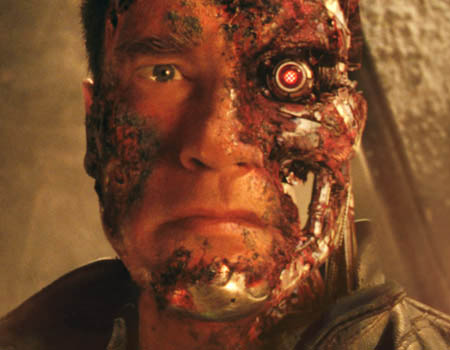
Terminator, as portrayed in the movie "Terminator"


         The idea of complete genome sequencing for newborns is not without arguments against it. Where and how will this information be stored? (Please not on a computer named Skynet!) How long will it be stored for, and who will have access to it? Will the information be strictly for clinicians? Could researchers use it to help drive research? Will insurance companies deem individuals ineligible for insurance, or base insurance premiums off of this information?
               We live in an exciting time where technology is moving at a blistering pace. As much as we need the innovators pushing us forward, we need the critics urging caution (before a cyborg from the future travels to the past to kill our mother before we are born). Where is the line drawn? Will the future consist of a race of genetically engineered superhumans? The debate on how much information should be taken from DNA sequencing projects and what should be done with that information is taking place right now.
              Speaking of DNA sequencing and robots (http://www.aurorabiomed.com/nucleic-acid-isolation.htm) there already exists robots for the automatic extraction of DNA from human tissue. This helps researchers by freeing up time for them to do other tasks while DNA can be extracted from many samples at once, with minimal concern of time travel and minimal danger for prospective mothers.

More information about Aurora Biomed: www.aurorabiomed.com

https://twitter.com/AuroraBiomedhttp://www.linkedin.com/company/aurora-biomedhttps://www.facebook.com/aurorabiomed9


Thursday, 31 October 2013

Remember, remember the fifth of Movember


Remember, remember the fifth of Movember

November is known for many things, Guy Fawkes, the coming of winter, the start of Christmas music in the malls, and of course Movember. That's right, the month where men everywhere put aside their aversion to hipsters and don that lip warmer in support of raising awareness (and money!) for mens health issues. So it's time to embrace your inner Tom Selleck and step up to the plate for this worthy cause. Don't worry, you don't have to wear skinny jeans or listen to bands that nobody has heard of, supporting awareness of mens cancers is as simple as not shaving. Well, not shaving your upper lip at least.

Movember was started in 2004 by a group in Australia. Since then it has expanded to the Movember Foundation, a worldwide charity organization which has raised over $174 million to date in support of raising awareness for mens health issues including prostate cancer. Since it's conceptualization the network of Mo-Bros has expanded world wide with 1.1 million people signing up to raise mo' money in 2012.

The issue at the heart of all the furry fun? Prostate cancer. Prostate cancer is the sixth most common cancer in mo' bros world wide and the second most prevalent in the USA. The factors for risk are many including diet and genetics. Men that have a first degree relative with prostate cancer are at double the risk of developing the disease than men without. Although no one single genetic cause has been identified for prostate cancer, it has been linked to some single nucleotide polyMO'rphisms (changes in the DNA), including mutations in the BRCA1 and BRCA2 genes involved in breast cancer. Increasingly specific risk groups can be uncovered through genetic screening using next generation sequencing technologies.

So how does it work? DNA samples can be taken to be tested through a cheek swab or blood test. The DNA is extracted from the sample and prepared into a library for sequencing. This can be done completely by robots like this one. The DNA is copied by the same proteins that synthesize your DNA and read out by scientists using different colors for each letter of your DNA and a highly sensitive camera to detect the signal.
All in all, the goal of Movember is to raise awareness for mens health issues, particularly for prostate cancer. So prep your upper lip for a furry accessory and give a high five to your fellow mo-bros when you see an awesome soup strainer on the street. Make sure to invite your friends, mo' stache helps raise mo' awareness; even Mario had Luigi.

Find out more about Movember: www.movember.com
Learn more about NGS library prep: http://www.aurorabiomed.com/next-generation-sequencing.htm
Learn more about Aurora Biomed: www.aurorabiomed.com

https://twitter.com/AuroraBiomedhttp://www.linkedin.com/company/aurora-biomedhttps://www.facebook.com/aurorabiomed9