Showing posts with label NGS. Show all posts

Friday, 21 February 2014

Pooping our way to a healthier tomorrow

Back in December we wrote about the human microbiota and how the microbiome contributes more to the human physiology than we think; disregulation of the microbiome has been linked to chronic C. difficile infection, diabetes, obesity, inflammatory bowel disease, Crohn's disease, and perhaps even autism. Altering the microbiome of affected individuals so that they resemble "healthy" individuals through fecal transplant has been shown to reverse the symptoms of many of these diseases showing that disorder is linked to a change of physiology due to changes in the microbiota (in fact, fecal transplant is more effective than antibiotics in treating chronic C. difficile). Before we go putting fecal transplant on a pede-stool, the scientists and the FDA are still debating how to regulate this bowel movement movement (it's a hard job, but somebody's got to poo it!).

Currently fecal microbiota is regulated as a biological, which means it has stricter control than some other substances and really bungs up both research and treatment of patients who could benefit from it (what a crappy situation). Scientists are arguing that fecal microbiota should be treated as a tissue or given it's own category, similar to what is done with blood.This would allow greater flexibility for both clinicians and researchers to poo what they gotta poo.

Microbiome research is one of the fastest emerging areas of research. Next generation sequencing is pushing this area of research to flush out our understanding of how the microbiome contributes to our physiology. NGS allows rapid analysis of mixed sequences to determine not  only the the species of microbes present, but the exact composition of a microbial community.

To support NGS workflows, Aurora offers the VERSA GENE, a complete walk-away solution for genomics workflows including NGS library preparation (grab your newspaper and take some time for yourself). The accurate liquid handling provides consistency between library preps and this open-system platform allows researchers to leverage different library preparation kits and chemistries available to fully realize everything that NGS can poo. At Aurora we believe that supporting science that can truly make a difference is not just a job, it's our doody!

Monday, 2 December 2013

It's a community thing

        What if I told you that 90% of your genome isn't human. What if I told you that for every human cell, your body hosts 10 bacterial cells. What if I told you that bacteria don't just live in us, they are a part of us. It's true, bacteria outnumber us 10 to 1 in our own bodies, their DNA and biochemistry contributes to our own biochemistry as a greater "super-being". That's right, we are all super-beings made up of part human, part bacteria. It doesn't seem so bad when someone calls you a super-being does it? The truth is bacteria are as much a part of us as they are just "on us". Studies have linked our bacterial populations to many diseases such as inflammatory bowel disease, diabetes, obesity, chronic C. difficile infection, and even tumorigenesis in cancer. The genes and biochemistry of bacteria contribute to all these things.
          How you ask? Different sub-populations of bacteria contribute different aspects to your microbial community. Just like the TV show "Community" different sub-populations play different roles in the group; depending on who is or isn't present, the whole group can work well together, or fall apart in a hilarious episode of mayhem (it isn't as funny when it happens in real life...). If one role is over or under represented the entire system can be thrown off leading to a disease state.
           Recently these conditions have had good success being treated by restoring the microbial balance to that of a "healthy" situation. Obesity has been reversed, insulin sensitivity increased, and bowel diseases such as IBS and Crohn's have been treated through fecal transplant therapy. Yup, it is disgusting as it sounds but it goes to illustrate how important a healthy microbial community is to our overall health. Transplant not only temporarily helps to change the recipients microbial population but these changes are retained over time essentially transplanting a healthy microbial community and resulting in real biochemical changes in the host due to different interactions with microbes.
           It is being increasingly revealed that our microbiome plays a huge role in our body's physiology. Microbiome studies have greatly increased in number in recent years and it seems as though we are just beginning to uncover the extensive interplay between our body and our microbes. As the analytical powers of Next Generation Sequencing continue to increase we will be able to solve more and more of these mysteries. Prospective samples for NGS studies need to be handled with uniformity to ensure that no one species is over or under represented due to processing error. Automation helps ensure that each sample is handled in exactly the same way and helps remove sources of error associated with manual techniques. To learn more about Aurora's automated NGS library prep workstation, click here.

More info about Aurora Biomed: www.aurorabiomed.com

https://twitter.com/AuroraBiomedhttp://www.linkedin.com/company/aurora-biomedhttps://www.facebook.com/aurorabiomed9

Thursday, 28 November 2013

A Little Golden Nugget

A Little Golden Nugget

Pope Francis blessing a sample of Golden Rice in the Phillipines
          In North America we are lucky. For the most part we don't have to worry about where our next meal will come from, diseases associated with malnutrition are much more rare. This is not the case in the developing world where food security is still an issue of great concern. According to the Declaration of Human Rights put forth in 1948 by the UN "food security exists when all people, at all times, have access to sufficient, safe, and nutritious food to meet their dietary needs and food preferences for an active and healthy life". However, upwards of 250,000 to 500,000 children in the developing world go blind every year due to Vitamin A deficiency and up to half of these die from the condition. Vitamin A is found in many foods: carrots, spinach, mango, papaya, eggs and cheese, all of these foods can act as sources for Vitamin A, but lack of access to nutritious food drives the problem in many parts of the developing world.
 
World distributions of Vitamin A deficiency
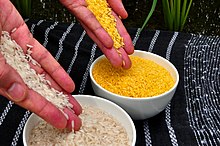
            In the early 2000's a potential solution was created: Golden Rice. The rice was genetically modified by a team in Switzerland to include the synthetic pathway of  a Vitamin A precursor. As rice is a staple food in many of the countries where endemic Vitamin A deficiency is a serious issue, this presented a viable solution. However, Golden Rice has faced much opposition throughout its development. Some fear that cultivation of Golden Rice will lead to wider acceptance and adoption of other GMO's, others argue that allowing corporate control of food production in this countries actually undermines food sovereignty and would help perpetuate the cycle of poverty. In either case, all the implications of adopting GMO products must be weighed against the potential benefits to society.
Golden Rice (right) compared to normal rice (left)
          Earlier this year Pope Francis blessed a sample of Golden Rice in the Philippines shortly after protesters destroyed a field of the grain. The benefits to mankind outweigh the negative aspects of this GMO crop which is why Pope Francis chose to bestow his blessing on it. Other GMO's act to add resistance to herbicide or disease, in general acting to benefit the farmer and not the consumer. In this case just the opposite is true, Golden Rice has been supported by a variety of NGO's and is designed to benefit the people and not put profits in the pockets of large corporations. As with adoption of any technology, the benefits must be weighed against the risks.
          Production of GMO's is a complicated and arduous process. Regardless of personal views of the risks and benefits of GMO's, thousands of brilliant scientists continue to work on developing new varieties; some may benefit the producers, some may benefit people, and some may only help to add to the bottom line of large corporations. Aurora's goal is to help the scientist, to expedite sample preparation in basic lab operations such as DNA extraction, PCR setup, and DNA sequencing efforts necessary for development of new crops whether they are created through genetic modification or conventional breeding programs. Automating the techniques associated with the scientific process helps to drive development cycle and bring new, beneficial products to market faster. To find out more about how Aurora helps drive various applications visit our webpage.

Find out more about Aurora: www.aurorabiomed.com

https://twitter.com/AuroraBiomedhttp://www.linkedin.com/company/aurora-biomedhttps://www.facebook.com/aurorabiomed9

Monday, 4 November 2013

The Great (DNA) Debate

The Great (DNA) Debate

             At the recent ASHG meeting one of the hot-button topics was DNA sequencing in newborns. Currently, the states require the screening of minimum 21 genes in all newborn babies for hereditary disease; having information about the babies A's, T's, C's and G's can immediately improve their treatment to make sure they can learn their ABC's. As DNA sequencing technology continues to improve we may be able to completely sequence the entire genome of a newborn child. This may help answer questions like will the child succumb to the family predisposition to diabetes or heart disease, giving valuable information about potential for diseases and other information that could help discover markers and treatment for diseases (or find a genetic marker for being devilishly handsome).
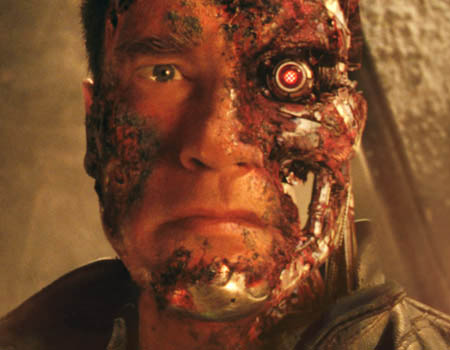
Terminator, as portrayed in the movie "Terminator"


         The idea of complete genome sequencing for newborns is not without arguments against it. Where and how will this information be stored? (Please not on a computer named Skynet!) How long will it be stored for, and who will have access to it? Will the information be strictly for clinicians? Could researchers use it to help drive research? Will insurance companies deem individuals ineligible for insurance, or base insurance premiums off of this information?
               We live in an exciting time where technology is moving at a blistering pace. As much as we need the innovators pushing us forward, we need the critics urging caution (before a cyborg from the future travels to the past to kill our mother before we are born). Where is the line drawn? Will the future consist of a race of genetically engineered superhumans? The debate on how much information should be taken from DNA sequencing projects and what should be done with that information is taking place right now.
              Speaking of DNA sequencing and robots (http://www.aurorabiomed.com/nucleic-acid-isolation.htm) there already exists robots for the automatic extraction of DNA from human tissue. This helps researchers by freeing up time for them to do other tasks while DNA can be extracted from many samples at once, with minimal concern of time travel and minimal danger for prospective mothers.

More information about Aurora Biomed: www.aurorabiomed.com

https://twitter.com/AuroraBiomedhttp://www.linkedin.com/company/aurora-biomedhttps://www.facebook.com/aurorabiomed9


Thursday, 31 October 2013

Remember, remember the fifth of Movember


Remember, remember the fifth of Movember

November is known for many things, Guy Fawkes, the coming of winter, the start of Christmas music in the malls, and of course Movember. That's right, the month where men everywhere put aside their aversion to hipsters and don that lip warmer in support of raising awareness (and money!) for mens health issues. So it's time to embrace your inner Tom Selleck and step up to the plate for this worthy cause. Don't worry, you don't have to wear skinny jeans or listen to bands that nobody has heard of, supporting awareness of mens cancers is as simple as not shaving. Well, not shaving your upper lip at least.

Movember was started in 2004 by a group in Australia. Since then it has expanded to the Movember Foundation, a worldwide charity organization which has raised over $174 million to date in support of raising awareness for mens health issues including prostate cancer. Since it's conceptualization the network of Mo-Bros has expanded world wide with 1.1 million people signing up to raise mo' money in 2012.

The issue at the heart of all the furry fun? Prostate cancer. Prostate cancer is the sixth most common cancer in mo' bros world wide and the second most prevalent in the USA. The factors for risk are many including diet and genetics. Men that have a first degree relative with prostate cancer are at double the risk of developing the disease than men without. Although no one single genetic cause has been identified for prostate cancer, it has been linked to some single nucleotide polyMO'rphisms (changes in the DNA), including mutations in the BRCA1 and BRCA2 genes involved in breast cancer. Increasingly specific risk groups can be uncovered through genetic screening using next generation sequencing technologies.

So how does it work? DNA samples can be taken to be tested through a cheek swab or blood test. The DNA is extracted from the sample and prepared into a library for sequencing. This can be done completely by robots like this one. The DNA is copied by the same proteins that synthesize your DNA and read out by scientists using different colors for each letter of your DNA and a highly sensitive camera to detect the signal.
All in all, the goal of Movember is to raise awareness for mens health issues, particularly for prostate cancer. So prep your upper lip for a furry accessory and give a high five to your fellow mo-bros when you see an awesome soup strainer on the street. Make sure to invite your friends, mo' stache helps raise mo' awareness; even Mario had Luigi.

Find out more about Movember: www.movember.com
Learn more about NGS library prep: http://www.aurorabiomed.com/next-generation-sequencing.htm
Learn more about Aurora Biomed: www.aurorabiomed.com

https://twitter.com/AuroraBiomedhttp://www.linkedin.com/company/aurora-biomedhttps://www.facebook.com/aurorabiomed9